
Nightly Rate
Avg rate you expect to charge/night

Nights Booked
Avg # of nights you expect to book/month

Mortgage
Monthly mortgage payment

Utilities
Monthly costs for heat/hot water, electricity/AC, WiFi & cable
“Aren’t you just like Airbnb and Vrbo?” We get that question a lot from people who haven’t worked with us yet.
We understand why. We’re all in the same industry — rentals. Guests can book Evolve homes on evolve.com, and every Evolve home also appears on Airbnb, Vrbo, and other major booking sites, which adds a little more to the confusion.
But Airbnb and Vrbo are just booking sites. Evolve is a management company supporting owners on their path to success.
Here’s exactly how Evolve is different from Airbnb, Vrbo, and other online marketplaces, how we work together, and how partnering with Evolve as an owner compares to self-managing your home on Airbnb.
Airbnb and Vrbo connect guests with homes and take a fee on each booking, but they don’t manage your property.
Evolve is a hybrid vacation rental management company. Real people and smart technology handle the business side of your rental — pricing, listing distribution, bookings, and guest communication — while you pick your local team, set your house rules, and maintain control. Evolve lists your home on Airbnb, Vrbo, and other sites, so it isn’t a choice between them.
Plenty of owners start by listing on Airbnb or Vrbo themselves. That gives you full control, but all the work. By Evolve’s estimate, self-managing takes roughly 5–10 hours a week per home, plus being on call whenever a guest messages.
Pricing well on your own is also getting harder. AirDNA forecasts 2026 U.S. occupancy at 57.4%, and guests are booking later and staying shorter, so rates have to move faster.
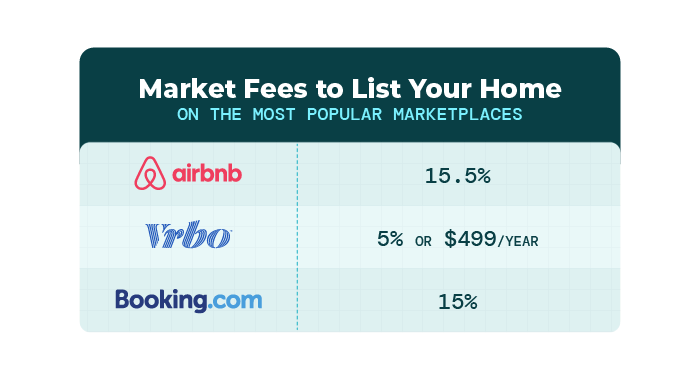
Platform fees are shifting, too. Airbnb moved hosts to a single 15.5% host-only fee between October 2025 and 2026. And Vrbo is following close behind, moving all hosts to a flat 12% commission and requiring your Vrbo rates to match your lowest rate on any other channel. That’s one more pricing job to manage across every site — but one you drop entirely when you partner with Evolve.
Finally, sites like Airbnb and Vrbo are best for targeting short-term rental demand, but the opportunity for owners can go far beyond vacation with broader distribution support. Evolve offers a Mid-Term Rental Add-On for hosts who want listing visibility on sites dedicated to longer stays. It puts you on Furnished Finder, Blueground, Zillow, and Apartments.com — in addition to channels like Airbnb and Vrbo.
| Service | Evolve | Self-Managing on Airbnb or Vrbo |
|---|---|---|
| What it is | Hybrid vacation rental management | Booking sites you run yourself |
| Pricing | SmartRates dynamic pricing and revenue managers, using data from tens of thousands of homes, within your rate preferences | You, or a pricing tool you pay for |
| Where your home is listed | evolve.com, Airbnb, Vrbo, Booking.com, Google Vacation Rentals, Hopper — plus Expedia, Homes & Villas by Marriott Bonvoy, and other sites for eligible listings | Each site you set up and manage |
| Guest communication | Support pre- and post-stay, with real people available 24/7 | You, often around the clock |
| Cleaning and on-site care | Your own local team, or one of Evolve’s vetted partners | You arrange it |
| Your control | You choose your team, set pricing foundations and house rules, and own your calendar availability | You have full control — and all the work that comes with it |
| Cost | Management fees from 10%–15% depending on your plan, plus a one-time $250 onboarding fee | Platform host fees (15.5% for Airbnb and 12% for Vrbo), plus any external software, photography costs, and your time |
Once working with Evolve, hosts quickly discover the difference between our service and self-managing on Airbnb or Vrbo. Our owners earn 18% more revenue and book 9% more nights than the market average.
Evolve is built for hosts who want to stay in charge of their rental without doing it all alone. It’s a strong fit if you:
Evolve may not be the best fit if you want a fully hands-off, on-site team to handle everything, or if you don’t plan to rent your home regularly.
If you’re ready to learn more about how we can help you, see if you qualify today.
No. Airbnb is a booking marketplace that connects guests and hosts. Evolve is a hybrid vacation rental management company that handles pricing, marketing, bookings, and guest communication for owners — listing their homes on Airbnb, Vrbo, and other major sites
Yes. Evolve lists all homes on Airbnb, Vrbo, Booking.com, Google Vacation Rentals, Hopper HVN, Savvy, VacationRenter, and evolve.com — plus Expedia, Homes & Villas by Marriott Bonvoy™, and other sites when listings are eligible. We manage rates across all of them out of a centralized calendar hosts can see in their Owner App.
On Airbnb alone, you handle the listing, pricing, and every guest message yourself. With Evolve, our team and technology handle that work across multiple booking sites, while you keep control of your local team, calendar, and house rules.
It depends on your time and goals. Self-managing gives you full control but takes roughly 5–10 hours a week per home. Evolve handles the business side for fees starting at 10%, so you can earn more without doing it all yourself.
No. You keep your own cleaner or local team, or Evolve can connect you with a vetted local partner. That’s part of why Evolve’s fees are lower than full-service managers’.
Evolve pairs expert revenue managers with proprietary SmartRates technology to dynamically set your pricing every day. You can set preferences through a variety of flexible controls, like minimum nightly rates, automated gap pricing, and discounts.
Yes. You can block your own dates for personal stays anytime.
Core is a 10% management fee, Plus is 15%, and Pro has a custom fee for owners with two or more homes.
Vacation rentals have spent the last decade evolving from a niche side hustle into a serious asset class, with market size projected to reach over $121 billion by 2033. Owners now include first-time real estate investors, second-home buyers, multi-property operators, and even institutional players — and the mix keeps growing.
So: are vacation rentals actually a good investment? The honest answer is yes, for the right owner in the right market with the right operational setup. Here are eight key benefits that keep vacation rental ownership compelling.
In This Article:
Strong Income Potential
Offset Costs
Personal Use of the Property
Property Appreciation
Tax Advantages
Protect Against Inflation
Diversification From the Stock Market
Built-In Path to Scale
The vacation rental industry creates opportunity for what our real estate experts consider a “high-reward profile.”
A well-performing vacation rental typically generates significantly more income per night than a comparable long-term rental, which can translate to higher annual earnings even after the additional operating costs of short-term hosting.
It’s important to note that income scales with operational quality, not just property quality. Dynamic pricing, listing on multiple channels, and strong reviews can improve a property’s annual revenue significantly.
Creating solid revenue streams and growing your income property portfolio are the main investment goals for many second home owners. But there’s also massive value in offsetting expenses from the start.
From mortgage payments and utilities to insurance fees and maintenance costs, vacation rental income can cover monthly expenses and help your home pay for itself in a shorter time frame.
Bonus benefit: using a vacation rental management company with especially low fees (like Evolve) can help owners break even and start earning profit faster.
Unlike a stock or a bond, a vacation rental is an asset you can also enjoy. Owners get to block weeks for personal use, host family and friends, and have a paid-for home base in a destination they love.
For many owners, this dual purpose is a key factor. The property earns when you’re not there and serves your own travel needs when you are. The trick is blocking the calendar well in advance and avoiding personal use during peak travel periods, so the weeks with the highest earning potential aren’t the ones you’re making unavailable to guests.
Like other real estate, vacation rental properties have historically appreciated over time — especially in destination markets with limited inventory. Appreciation compounds alongside cash flow, building equity over time.
Markets vary, so this benefit isn’t guaranteed in every location or every year. But real estate appreciation has consistently been one of the most reliable wealth-builders available to individual investors.
Vacation rentals open up a set of business deductions that can reduce taxable income. The specifics depend on personal use days and how the activity is treated, which is why a qualified tax professional is worth their fee.
Depreciation in particular is often the surprise lever. Even when a property is appreciating in market value, you may be able to leverage bonus depreciation on the building and major improvements for tax purposes — a powerful combination that doesn’t show up in many other asset classes.
Done right, the tax treatment of vacation rental ownership is one of the most underappreciated parts of the overall return profile.
Evolve can connect you with trusted specialists in tax strategy, asset protection, and cost segregation.
Real estate has historically held up well against inflation. Nightly rates can be adjusted upward as costs rise, and the property itself tends to gain value in inflationary environments. That combination makes vacation rentals an inflation-resistant asset compared to many fixed-income alternatives.
Dynamic pricing makes this hedge sharper. A property using real-time rate adjustments captures rising market conditions automatically, where a fixed-rate long-term lease wouldn’t reprice until the next renewal cycle.
Vacation rental returns aren’t tightly correlated with public equity markets. When stocks drop, your nightly rate doesn’t automatically follow. That diversification benefit is a useful piece of any larger investment portfolio.
It’s not perfect diversification — recessions and travel disruptions can affect demand — but the correlation is loose enough that vacation rental ownership complements a traditional portfolio rather than duplicating it.
Most investments don’t come with an obvious next move. Vacation rentals do. A first property that performs well naturally suggests a second; a portfolio of two or three opens the door to operational efficiencies and brand-building options like a dedicated booking site (something multi-property owners and operators on our Pro plan get with our partnership).
For owners who enjoy the work — or who partner with a management company that handles it for them — this vacation rental business scalability is part of a long-term wealth strategy.
Vacation rentals are a good investment when the property, the market, and the operator are all working together. Getting all three right can result in excellent earnings.
If you’re evaluating a vacation rental investment — or already own one and want to maximize the return — see if you qualify for a free consultation with one of our Vacation Rental Advisors. We’ll help you stress-test the numbers and partner on a path to success for your home.
When you’re first starting out as a vacation rental owner, there’s one big question: how much money can I expect to make?
Short-term rental properties can give owners solid revenue returns, and are often more profitable than long-term rentals. But that additional income doesn’t come without costs. From taxes and insurance to cleaning and management fees, it’s important to factor a number of expenses into your income calculations to help paint an accurate picture of your home’s profit potential.
That’s where our vacation rental income calculator comes in. Simply plug in your monthly revenue and expenses below, then sit back as our tool automatically churns out an annual income estimate — all factors considered.
Not sure where to pull those numbers? Take a peek below our tool to understand your income and expense variables in more detail, and check out our bonus resources that can help you make confident estimates.
The first step toward accurately estimating rental income? Defining each term properly. Here’s a quick-reference glossary of what each variable used in our calculator means.
Nightly Rate
Avg rate you expect to charge/night
Nights Booked
Avg # of nights you expect to book/month
Mortgage
Monthly mortgage payment
Utilities
Monthly costs for heat/hot water, electricity/AC, WiFi & cable

Insurance & Property Taxes
Monthly costs for homeowners insurance, liability insurance, property protection plan + your state’s property tax rate

Other Expenses
Monthly sum of HOA & maintenance costs + avg stocking/upgrading costs

Management Costs
Monthly % of income set aside for management/marketing fees (dependent on how you run your business)
Let’s be real: estimating an accurate income for your investment property can be confusing. Certain elements — like mortgage and utility payments — have fairly standard numbers you can enter into the calculator without much math. But others require more contextual consideration. So, let’s walk through each step of the process in more detail.
To accurately estimate nightly rate and expected nights booked, it’s important to understand the current market in your area.
The good news: we’ve analyzed tens of thousands of listings across North America to compile the most impactful performance metrics for you. From nightly rate and nights booked to average lengths of stay and prime booking windows throughout the year, all of the results can be found in our vacation rental market analyses library. Each provides a data-backed gauge of how direct competition performs — and, in turn, how much you might be able to to charge and book.
Once you pull the nightly rate and nights booked averages from those market analyses, plug them into the vacation rental income calculator above to start laying a solid foundation for estimating monthly income (and overall revenue).
Owners who work with Evolve get access to our team of revenue experts and exclusive revenue optimization strategies that are proven to outperform the market.
From taxes to marketing fees, your expense estimate relies heavily on custom quotes and individual choices.
First, add up the monthly costs of your different types of insurance — like homeowners insurance, liability insurance, and a property protection plan.
Evolve owners are automatically covered for accidental damages via our risk protection programs.
Then comes property taxes. How they’re applied varies by state, so be aware of your particular municipal requirements. If you’re not sure, you can plug your rental property’s address into this complimentary tool to receive the right rate.
Once you have an estimate for both, combine the numbers and enter the sum into our short term rental calculator.
Next, input your monthly mortgage payment and utilities.
To incorporate other expenses, first combine monthly HOA and maintenance costs, cleaning fees, and the average expense of keeping your short-term rental inventoried and well-stocked for guests.
If you need to make furniture or decor upgrades, put a price to those overarching updates and divide by 12 before adding to your total monthly view of those additional expenses.
Finally, there are management costs to consider. These fees and how they work look different depending on how you choose to run your vacation rental business.
If you run a vacation rental without any help:
If you use a property manager:
If you work with Evolve (who lists your home on all the best vacation rental sites at no extra cost):
Between the steep fees of traditional property managers and the overwhelming responsibility of a DIY approach, it’s hard to strike a cost-benefit balance that guarantees your success. At least, it was until Evolve came into the picture.
For an industry-low management fee (that’s backed by our Risk-Free Guarantee), we’ll apply a proven-to-work marketing and booking strategy to your vacation rental, boosting your revenue potential while keeping costs (and stress levels) down.
Hop down to the form below to see if you qualify for our services and kickstart a conversation with one of our vacation rental pros.
Digital nomads, rejoice: Work and play no longer have to be separate. While you’re still remote, get some fresh air without using all of your vacation days. Switching up your routine a little can inspire new thinking and deepen your focus — all while you enjoy all the luxuries of vacation on your off-time.
Ready to get out of the house? Pick one of these places based on how you like to feel at work and change up the scenery.
Make your co-workers jealous by joining the company meeting poolside. Lounge in the sun while you knock projects off your list, then enjoy a crisp plunge in the water. Bonus: all of our homes are vetted in person, which means these pools are as good as they look.

Soak in the desert sun from this Goodyear home with a resort-style hot tub and pool combo. Work on your tan while you work from the sprawling patio, complete with a fully shaded outdoor area. The interior’s open layout and farmhouse furnishings are so beautiful that you’ll want to stay in and make meals at home — but when you’re ready to get out, grab ice cream at The Frozen Monkey and take a stroll around South Lake Park.
If you’re feeling fancy, this Florida short-term rental is like stepping into a palace you can call your own. Here, 6,500 square feet of space is yours — meaning you can find a new place to work remotely every day. Sit al fresco in the expansive outdoor cabana or lounge by the palm tree-lined pool worthy of a magazine shoot. On weekends, day trip to the Florida Keys or take it easy with a bottle of local wine from Schnebly Winery.


The moment you set your bag down, the cerulean waters of this backyard pool will invite you to take a dip. Catch up with your group beneath the pergola, then swim laps in this sophisticated marvel as the sun goes down. Enormous windows let the light in here and make it feel like you’re by the pool, even when you’re hard at work inside. When you need to get out, experience the big city feeling by taking a walk through downtown Austin.
Honorable Mentions: Enjoy views of your own private lake and private pool at this luxurious vacation rental in Norman, OK, visit this meticulously decorated home with its own mini golf putting green and awe-inspiring pool in the Coachella Valley, or swim by day, stream movies in the home theater by night from this Pigeon Forge vacation rental.
Exercise helps mental health and increases productivity — and companies are encouraging their teams to work out more than ever. These vacation rentals are perfect for a getaway that blends work-life balance, with a home gym to break up your day.

Redwoods and red wine are waiting for you in Sonoma County. This charming cabin is the place to go glamping in the woods while still keeping a wi-fi signal. Nature is your gym here in a home that’s surrounded by trails and a few minutes from the beach, but if you want a more traditional place to exercise, hit the cabin’s small home gym. After a long work week, hop in the car, soak in ocean views, and savor wines from famous vineyards.
Turn your workday into a fairytale at this welcoming Acworth mansion, complete with a pool and its own movie theater. Take your lunch break in the home gym, catch up on emails from the gazebo, and toast to the day by the outdoor fire pit once five o’clock hits. There are so many ways to clear your head — whether it’s playing billiards, or cooking a meal for your group and enjoying it in the sprawling dining areas.

Honorable Mentions: This budget-friendly vacation home in Glendale, AZ offers all the perks of a private resort, including a pool and a putting green. Or, go big and work remotely from this enormous vacation home sitting over the lake in Kaiser, MO. You can also sit out by your own private creek and access some of Colorado’s most pristine trails from this home amid the treetops in Evergreen, CO.
Evolve only rents homes with private entrances, which means that every place on our site is perfect for finding focus. But if you’re looking for a getaway where you can separate your 9-5 from your night of relaxation, these picks come with a home office and the bliss of complete quiet.
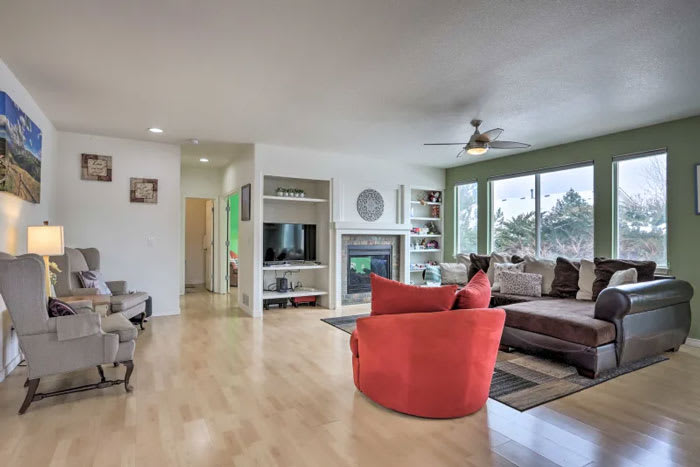
Enormous Retreat In Erie, CO
This vacation rental is made for remote work retreats with multiple offices, plenty of separate seating areas, and a boardroom-style table. Travel with friends and tackle the workday separately from your own private spaces, then reconnect over a game night in the living room. Wind down while strolling downtown Boulder (just a short drive away) with the Flatiron mountains as your backdrop.
Enjoy a life of luxury from this scenic cabin equipped with its own lofted office for working remotely. Catch up about the day around the outdoor fire pit or sip wine on the sprawling wood patio immersed in the forest. If you feel like getting outside, explore the easy Show Low Bluff Trail on foot or spend a leisurely day fishing at Fool Hollow Lake.

Honorable Mention: Work remotely from this vacation rental in Fairplay, CO, and enjoy a cozy, log cabin exterior with a clean, modern interior.
Good books are meant to be enjoyed next to a crackling fireplace. After a long day at the (virtual) office, sink into the couch at one of these places and find your cozy. All you need to bring is hot cider and groceries — each of our homes comes fully equipped with all the amenities you need to stay in for the night.
Hit the road and head to Idyllwild, which sits in California’s San Jacinto mountains. Pets are welcome at this airy dome house that’s a theater to thousands of night stars. Once you’ve closed up your laptop for the day, hit the trails at Mount San Jacinto State Park, then bring home a mountain pie to share from Idyllwild Pizza.

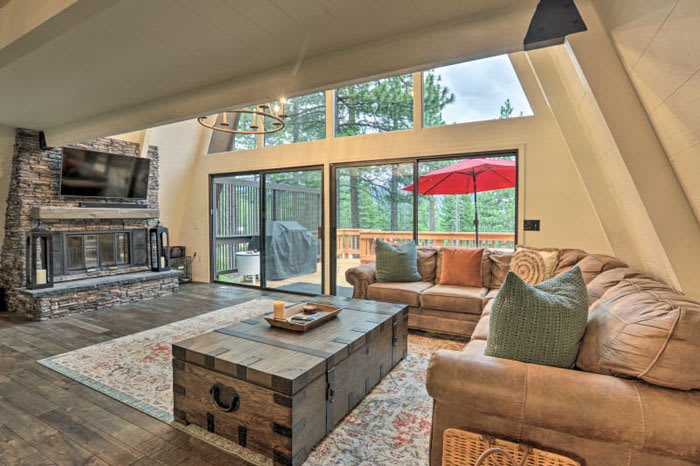
Rise to the sound of trees rustling out this bright property filled with natural light. Kick your feet up in the loft to get some focus, then spend happy hour in the hot tub before cooking up a feast in the gorgeous, modern kitchen. When you’re ready for fresh air, take an evening bike ride along Lake Tahoe, or just sit out and enjoy the lake.
Breckenridge is an outdoor paradise — and this enormous cabin that sleeps 14 is just the place to enjoy it. Take your calls from the quiet porch, indulge in a midday break to shoot some hoops in the in-home basketball court, and wind down by the fire after an evening of exploring the area’s sites. Window shop along Main Street and grab takeout, or find a hike like Hoosier Pass you can do as the sun goes down over the mountain.

Honorable Mentions: Sip a nightcap on a porch overlooking the creek at this vacation home in Frisco, CO, or soak your bones in the hot tub surrounded by trees in this Alto, New Mexico cabin.
Get some new perspective on what you’re working on from one of these places with a view. Find yourself thinking in new ways as you walk along the beach or sit out on the lake, free to let your mind wander. Just be sure to bring a notepad with you as you roam these houses for the moment a great idea strikes.

If you’ve ever had the dream of looking out to the shoreline from a hot tub, this is just the place for you. This hilltop home in the Pacific Northwest is a destination for remote work, with several cozy seating areas, an unbelievable porch view looking over the coast, and a hot tub where you can dip and drink it all in. After work, take a scenic, slow drive along the Tillamook Bay and end the evening with scoops at the iconic Tillamook Creamery.
A lake with a private dock is yours at this calming escape in Albion, MI. This home is filled with windows so you never miss the view, even when you’re inside. There are so many places to work at this home on the golf course — whenever you need some fresh thinking, just pick a new room. The spacious kitchen opens right up into the living room, so you can share stories as you prepare the dinner to share. Days off can be spent on the course, dipping in the lake, or curling up next to a roaring fire while keeping the view.

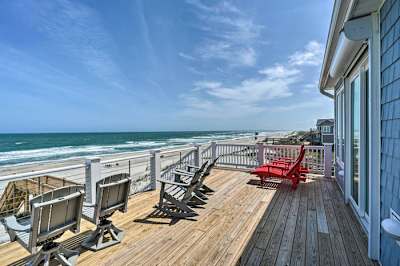
Beachfront Home In Topsail Beach, NC
Creativity is often sparked by a long walk, and here, you can take that walk out on the beach. Sit out on one of the two decks facing the waves, then step out onto the sand when you need a break. Sunsets here look like a postcard, and you can enjoy them from a bright, cheerful house that is decorated to feel like vacation in every room. Spend the weekend grilling up porch on the outdoor barbecue and catching up your beach read in the pristine sand.
Honorable Mentions: Get out into the mountains at this Jefferson, CO cabin with a verdant view of the mountains and its own game room and treehouse. Or, book this cheerful beachfront home in New Smyrna Beach, FL with ocean access and take your morning coffee in the sand.
Enjoy the freedom to work remotely from a vacation rental anywhere, with all the comforts of home. Find your perfect place to get some fresh air and rest easy knowing that it’ll be professionally cleaned and ready for your arrival.
For many owners considering a vacation rental business, “how much do Airbnb hosts make?” is question #1.
The short answer: according to Airbnb, the average U.S. Airbnb host earned about $15,600 in 2025. And when AirDNA looked at Airbnb earnings on a per-listing basis, they put the median at roughly $2,400/month.
National averages are a useful starting point, but two homes on the same street can earn very different amounts. Second homeowners considering the move to Airbnb host need to factor in a variety of variables to lock in their true earning potential.
So the longer answer: it really depends. Here’s what to know about how much you can make with an Airbnb.
Evolve owners earn 18% more revenue than the market average. See what we do to get you there — or get right to scheduling a call.
In This Article:
Factors Impacting Earning Potential
The Levers That Boost Income Most
Revenue vs Earnings: Clarifying the Difference
The Value of Professional Management
How much Airbnb hosts make rides on so many variables. Keep these five top of mind.
Location is the single biggest driver of earnings. Some destinations have strong traveler demand while others draw less foot traffic. Some see demand year-round, while others have more seasonal guests. Performance for a three-bedroom house in Park City, UT therefore looks entirely different from one in Fort Myers, FL.
Bigger homes earn more — mostly because they command higher nightly rates, even as occupancy dips slightly. Bigger homes also tend to have the space for more amenities (like a deck, game room, or office).
The right amenities can pay for themselves. According to Evolve data, homes with perks like hot tubs, game rooms, fireplaces, dishwashers, and pet friendly policies earn more on average than those without.
Higher-rated listings earn more, because they’ve built the reputation that sells travelers. Even if your home and amenity mix matches a similar listing in your area, you should expect to earn less on average if your competition has more review volume at a higher rating.
A new listing builds reputation as it accumulates reviews, which means first-year earnings are almost always lower than what the same property can produce in year two or three. Expect to price slightly below your market for your first few bookings, deliver an over-the-top guest experience to build five-star reviews quickly, and increase rates as your rating stabilizes.
After managing tens of thousands of properties, the same handful of factors consistently separate top performers from average performers: dynamic pricing, multi-channel distribution, professional photography, and five-star reviews.
Owners who get all right tend to make more than their market average.
Often, “income” refers to gross revenue — not what ends up in your pocket. What you actually keep depends on your expenses: mortgage and insurance, utilities, cleaning, supplies, repairs, taxes, management fees, and platform commissions.
And that’s usually what owners are looking for when trying to sort out how much they can make with a vacation rental.
To figure out what’s actually landing in your bank account, you’ll need to calculate your net operating income. It’s one of the key elements of overall vacation rental ROI.
Figuring out how much you can make as an Airbnb host is one thing. Maximizing your income potential in another.
And that’s where a company like Evolve can help. We create a professional listing, promote it on all major booking sites (Airbnb, Vrbo, Bookings.com, and more), and pair proprietary tech with human expertise to set a dynamic revenue strategy that earns you more.
If you’re brand new to the idea of vacation rental, we help first-time hosts start strong and build momentum quickly. See if you qualify for a free consultation with one of our experts today. We’ll walk you through your earning potential and how our services can set you apart from the competition.
AirDNA put the median U.S. short-term rental at about $2,400 in monthly revenue in 2025. Top-quartile listings earned $4,600 or more a month.
The typical U.S. host earned about $15,600 in 2025, according to Airbnb.
No. Reported earnings are gross revenue. Subtract operating costs, taxes, and fees to find your net income.
Yes. Listing on multiple platforms reaches more travelers and can raise occupancy, which typically increases total revenue.
Vacation rental ROI is one of the primary measures of success owners and investors want to understand — and one of the hardest to cleanly define. It depends on the market, the property, the season, the operator, and when you invest capital.
To get to a figure you can trust, we need to unpack a few pieces of the puzzle: the variables you need for an ROI calculation, what good ROI looks like, and how your approach to rental management could influence the result.
In This Article:
What Is Vacation Rental ROI?
Net Operating Income: The Basis for ROI Calculations
How to Calculate Vacation Rental ROI
What Good Vacation Rental ROI Looks Like
Self-Managing vs. Working with a Management Company
Simply put, vacation rental ROI measures your home’s profitability. It’s how much you can expect to get back annually in relation to how much you invested.
When you see headline numbers like “the average vacation rental makes $X,” those almost always refer to gross revenue — the total dollars a property booked over a year. Gross revenue is useful, but it’s not what ends up in your pocket.
True earnings — what most owners actually mean when they ask about making money — are net operating income. This deducts expenses like utilities, cleaning, supplies, routine maintenance, taxes, insurance, management fees, and any booking platform commissions.
If you’re trying to project this number for a property you aren’t yet running, be wary of national income averages. These span a huge range, and the median tells you very little about what your specific property can do. A two-bedroom condo in a slow market and a five-bedroom oceanfront home in a peak destination both contribute to the same average — and neither helps you forecast yours.
What matters is the market-specific picture: comparable listings in your area, their average daily rate (ADR), their typical occupancy, and their booking patterns. That’s the data you should anchor expectations to.
To understand your property’s ROI, consider two key metrics.
Cap rate is your net operating income divided by your home’s market value, expressed as a percentage. It’s the benchmark investors work against when evaluating markets and individual properties.
To calculate the income nominator, use realistic occupancy and ADR for your market — not the best month of the best year — to project annual gross revenue, then subtract your estimated expenses from that number.
To calculate the market value denominator, use the current estimated value for an existing home or the listing price for one you’re considering buying.
Many owners finance their home or invest money upfront in renovations. If you’re looking to understand your take home on a property considering everything you’ve put in out-of-pocket, you might be looking for a slightly different metric: cash-on-cash return.
Cash-on-cash return (also known as cash yield) takes your net operating income and then divides it by total cash invested. This includes your down payment, closing costs, mortgage, and any renovation costs. It’s more specifically what you earn on what you’ve invested, rather than what your property can return on its value (cap rate).
While your particular market factors shift the number you should expect to see, industry benchmarks provide a helpful baseline. According to AirDNA:
If your projections land well above these ranges, double-check that you’re using realistic occupancy and a full year of expenses before ruling the property a rare find.
There are a lot of considerations to make when deciding whether you should DIY manage or hire a vacation rental management company, and a big one is the difference each can make to ROI.
Self-managing means keeping more of your gross revenue per booking, but it also means doing the work — pricing, listing optimization, marketing, guest communication, cleaning coordination, and handling the occasional 2 a.m. lockout.
And managing everything yourself can get costly. You’d need to pay out of pocket for every booking platform you’d like to use, you risk missing out on bookings and revenue if your pricing or policies don’t measure up to expertly-run listings nearby, and one misstep in guest experience can land you in hot water with reviews.
A management company charges a fee, but the math often favors them when their pricing tools, channel distribution, and operational scale generate enough additional gross revenue to more than cover it. Different management models charge different amounts, of course — a hybrid solution like Evolve’s comes in at 10-15% depending on the management plan you choose, whereas traditional property managers can charge 30-50%.
The right answer ultimately depends on the time you’re willing to commit and the kind of work you’re interested in doing vs outsourcing. For owners who’d prefer an expert touch, the right professional management partner almost always pencils out.
If you want to set grounded expectations, our team can help define your goals and lay out a path to success. See if you qualify for a free consultation with one of our Vacation Rental Advisors — we’ll run the numbers with you and walk through how Evolve’s strategy could move the needle on your ROI.
On the heels of Airbnb’s host-only fee restructure, Vrbo is making similar waves.
Starting October 29th, Vrbo will charge all hosts on the platform a flat 12% commission. This means owners must give up a larger share of their rental revenue, and can no longer choose a subscription model.
Here’s what to know about Vrbo fees for hosts today, how they impact your rate-setting strategy, and what steps you can take to maximize your bottom line.
Under Vrbo’s old system, hosts had two options for how they structured fees. You could pay 5% commission per booking, or opt for an annual subscription of $499 with no per-booking commission. Both carried an additional 3% payment processing fee, unless you were connected through property management software.
Under the new structure, that annual subscription model is gone, and all hosts (regardless of whether they’re software-connected or not) will now pay a 12% commission on each booking’s total before taxes.
Unlike Airbnb — where the host fee shift absorbed the guest service fee — Vrbo travelers will still pay a service fee.
In simple terms: if you keep your pricing as it was before, you won’t see the same payout from each booking.
Owners used to give up $50-$80 in Vrbo commission on a $1,000 booking. Now, the same booking loses $120. To cover the difference and maintain historical payout expectations, owners will need to raise base pricing. But the mechanics of that math aren’t as straightforward as shifting your rates by 12%.
Because Vrbo’s fee is calculated on what guests pay at check-out rather than the price an owner sets upfront, keeping the same payout means raising your prices more than 12%.
Take this example:
Say your booking total is $1,000. If you add $120 to cover Vrbo’s new 12% commission, the total your guests see is now $1,120. This is the number Vrbo will take 12% on — which comes to $130.44 in commission. Once removed, your payout is now $980.56, not $1,000.
This is why owners must either raise rates above 12%, or say goodbye to a larger chunk of the payout you expected to earn.
Vrbo’s new Host Terms will also take effect on October 29, and are expected to include a requirement that hosts set their Vrbo rates at or below where they’re set on any other website (including your own).
This means you won’t be able to mark up rates for Vrbo but offer your listing at a more competitive price point elsewhere. When looking at your full pricing picture across channels, this becomes a serious consideration in finding your rate sweet spot.
The right answer for a DIY owner is ultimately driven by understanding how your property stacks up against similar listings in your market — and setting rates where you can cut commission-based losses without pricing yourself out of the running for guest demand.
Mark up your rates to account for Vrbo’s new commission too much and you’re no longer competitive with travelers. Mark up too little and you might give away more revenue per booking than extra bookings at your lower rate were worth.
Here’s the thing: the headache of pricing shifts — and reacting to industry changes like this one — goes away when you work with a professional management company like Evolve.
Evolve pairs proprietary SmartRates technology with the expertise of revenue managers to dynamically shift owner pricing every day. Our strategic human-meets-tech approach is designed to keep your home competitive based on market trends and similar listings in your area — while maximizing your earning potential. (Result: Evolve owners earn 18% more than the market average.)
And most important to this conversation: we mark up your advertised rate to cover the fees set by each channel. That includes Vrbo, alongside Airbnb, Booking.com, and other top sites — meaning their commission never comes out of your payout.
So a DIY host absorbs each platform’s fee changes directly, has to recalculate their rates across channels, and risks undercutting their own ROI in one way or another. An Evolve-managed listing is strategically priced to book up your calendar without impacting your bottom line.
Whether you’re new to vacation rental ownership or re-evaluating your current setup after seeing what Vrbo fees for hosts could cost you, Evolve’s Vacation Rental Advisors can walk you through what your path to success looks like when we partner together.
See if you qualify today. You’ll get a free consultation, where our experts can share an income projection for your property with the impact of commission fees already built in.
You’ve decided to work with a professional vacation rental management company. Now comes the harder part: figuring out which one.
The market has grown considerably, and the differences between companies are real. Fee structures, distribution reach, pricing tools, owner controls, and guest experience standards vary significantly. Knowing the right questions to ask makes the difference between a partnership that delivers and one that disappoints.
Here are eight questions you can ask managers to help you make an informed decision.
Want to know how Evolve would answer these questions? See if you qualify for our services today and we’ll put you in touch with one of our vacation rental experts ASAP.
In This Article:
What’s the Vacation Rental Market Like in My Area?
What Are Your Fees and Contract Terms?
What Services Are Included in Your Fees?
How Will You Market My Property?
How Do You Set Pricing and Revenue Strategy?
When and What’s Your Booking and Customer Support Availability?
How Will You Maintain My Property’s Condition and Handle Damages?
Can I Speak to Some Current Clients?
Understanding the local market is crucial for maximizing your property’s performance. Ask the management company about:
A company that knows the local market can tailor pricing, marketing, and booking strategies to optimize your revenue.
Get ready for the conversation with our vacation rental market analyses, which cover everything from income potential by property size to average daily rates by season.
Many companies charge management fees that typically range from 25-50% of your rental income. Before committing to anything, be sure to:
Look for a company with flexible terms and clear payment schedules. Evolve doesn’t require long-term contracts and our approach is backed by a Risk-Free Guarantee.
Different companies include different services. Clarify what’s covered in the management fee, such as:
Specifically ask what services aren’t included in their fees so you won’t be surprised by hidden costs. Comprehensive support and expert-level attention to detail shouldn’t depend on extra charges after you sign a management agreement.
A robust marketing strategy with a strong online presence is essential for high occupancy rates. Ask about:
We promote listings across all major platforms, including those that owners can’t access on their own, ensuring maximum visibility.
Revenue performance is where management companies differentiate most. Make sure the company:
Evolve’s SmartRates algorithm analyzes billions of data points and adjusts rates daily to keep your home competitively priced without requiring you to touch a thing — but you also have flexible controls that inform our dynamic strategy.
Make sure the management company offers:
These benefits ensure you never miss a booking opportunity and that guests have a seamless experience.
To keep your vacation rental guest-ready, make sure the company:
Making sure you’re covered for any accidental damages or issues is the best way to protect your investment.
We support our owners throughrisk protection programs, so you can rest easy knowing your home is in good hands.
Before signing a contract, ask to:
Client feedback can provide valuable insight into how the company performs over time.
Once you’ve asked the right questions, compare answers across two or three companies side by side (our comparison hub makes this easy). Weight the factors that matter most to you: revenue performance, owner controls, distribution reach, or fee structure. If a company is vague on any of them, that’s useful information.
Evolve is a hybrid vacation rental management company with an industry-low 10% management fee on our Core plan, transparent owner controls, and a track record of delivering measurable revenue results. See if your property qualifies and connect with a Vacation Rental Advisor for a free consultation.
Airbnb is finishing the rollout of a change it’s been making for over a year: replacing its split-fee model with a single host-only fee.
This shifts the cost of using the platform entirely onto owners, rather than splitting it between owners and guests. That makes pricing a more active responsibility for hosts — and getting it right matters more to your bottom line than it used to.
Here’s what to know about Airbnb’s host service fee percentage in 2026, how it impacts your rates, and what steps you can take to protect your payout.
If you’d like to gain the expertise of a strategic partner without losing the strong performance you’ve already built on Airbnb, we can help. Evolve owners can transfer an existing Airbnb listing so work comes off your plate, not momentum.
In This Article:
What Changed: Airbnb’s New Host-Only Fee Structure
What the New Fee Structure Means for Pricing
DIY Owners: More Exposure, More Room for Costly Mistakes
Evolve-Managed Listings: Already Adjusted, Payout Protected
Why Evolve Puts You in the Best Position to Earn
Under Airbnb’s old system, hosts paid a small service fee (around 3%) and guests paid a separate fee on top of the listing price (roughly 14–16%). Under Airbnb’s new fee structure, guests see one all-in price at check-out, and hosts pay a single fee — 15.5% for most listings — deducted from their payout.
That 15.5% Airbnb host service fee percentage for 2026 is the number most hosts should have circled. Airbnb has been migrating professionally-managed listings to this model since late 2025, and it’s now finishing the transition for independent hosts. The final deadline was September 15, 2026 in most countries, and October 13, 2026 in the EU and Switzerland. Reservations booked before a host’s switch date keep the old fee terms; everything after follows the new one.
The simplified check-out is good news for guests — one clear price, no fee surprises at the end.
For hosts, though, this change puts the full weight of the fee on the price you set. If a host’s advertised price stays the same as it was before, the payout doesn’t. Airbnb’s own example makes the mechanics clear: a $100 price under the old model still earned the host $97 after fees. That same $100 price under the new host-only fee earns just $84.50 — a real cut.
To keep the same payout, the price has to go up by more than 15.5%. And because the fee is calculated on what guests pay at check-out rather than the price an owner sets upfront, the math works out to roughly an 18% markup, not a flat 15.5% one. That distinction trips up a lot of hosts doing this manually — and it applies to cleaning fees and other add-ons, not just the nightly rate.
For owners managing their own Airbnb listing, this fee change isn’t a one-time fix — it’s an ongoing pricing exercise. A few things make it harder than it looks:
None of this makes an Airbnb listing a bad idea. It just means DIY owners are now doing new pricing math on a deadline — the kind of work that’s easy to get a little bit wrong in a way that adds up over a year of bookings.
Owners who work with Evolve have already been through this change. Evolve moved its Airbnb listings to the 15.5% host-only fee back in 2025 — and the adjustment happened automatically, with no changes required from the owner.
That’s because of how Evolve prices every listing for distribution in the first place. Your base rate — the one Evolve’s revenue managers set and continually adjust on evolve.com — isn’t the same as what a guest sees on Airbnb, Vrbo, or Booking.com. Each channel has always charged its own commission, ranging from roughly 3% to 18%. So Evolve marks up the advertised rate on each site by just enough to net you your full base rate after that channel’s fee comes out.
When Airbnb’s fee changed, Evolve’s markup changed with it. Owner payout math didn’t.
That base rate, however, isn’t just the simple difference between what an owner might set as a target and what the markup requires. It’s continually optimized using proprietary SmartRates technology and revenue manager expertise to dynamically shift with market trends.
This is the practical difference between DIY and working with a company like Evolve: a DIY owner absorbs each platform’s fee changes directly, has to recalculate pricing across channels, and risks either underpricing (giving away income per booking) or overpricing (losing bookings) in the process.
An Evolve-managed listing is strategically priced to be most competitive — while also grabbing the most earning potential every day.
Already listed on Airbnb but looking for professional support? When you join Evolve, we’ll transfer your Airbnb listing. The reputation you’ve built stays intact — you just offload the work of effective pricing (and gain access to all the major booking channels).
Airbnb’s fee change is a good example of a broader pattern: booking sites, tax rules, and market conditions shift constantly, and every shift is a small pricing decision an owner either has to make correctly or hand off to someone who will.
Evolve’s model is built around taking that work off your plate without asking you to pay for it twice. Your rates stay competitive across every channel because Evolve’s revenue team is continually adjusting them. Third-party fees, including Airbnb’s, get absorbed into a markup rather than passed through as a surprise deduction. And because Evolve’s SmartRates dynamic pricing and multi-channel distribution are working in the background, the goal isn’t just to protect your income from fee changes — it’s to grow it.
Whether you’re new to vacation rental ownership or re-evaluating your current setup after seeing what this Airbnb change actually costs, Evolve’s Vacation Rental Advisors can walk you through a free income projection for your property and show you what your payout looks like with the fee already built in.
See if you qualify to book a free consultation today.
Guest damage is one of the most common worries new owners raise — and one of the least common things that actually happens. Across a large sample of bookings, damage claims show up on well under one percent of stays.
That said, “rare” isn’t “never,” and the owners who worry about it least are usually the ones who’ve built a few layers of prevention into how they run their rental.
Here’s what reduces your risk, from before a guest ever books to what happens if something does get damaged.
In This Article:
Furnish and Set Up for Durability
Set Clear Expectations in Writing
Safeguard Your Property with Damage Protection
What to Do If Something Actually Breaks
How you set up your vacation rental matters not only to your home’s bookability and review potential but also to how easily damage might occur. Homes set up to withstand normal wear also tend to withstand the occasional accident better.
This isn’t about guest-proofing a home into something uncomfortable. It’s about making sure an ordinary bump, spill, or dropped item doesn’t turn into an expensive repair or replacement
A little planning at setup saves a lot of stress later.
Clear house rules (stated plainly in your listing, pre-arrival message, and welcome book) can do a lot to prevent damage, too. Guests who know the occupancy limit, the pet policy, and the party policy are far less likely to inadvertently push past them.
Consider safety in how you set damage precautions, too. A friendly reminder that no glass is allowed near the pool or hot tub in your welcome book (or on nearby signage) protects the safety of guests who might not think twice about bringing a drink in with them — while also reducing the risk that something gets dropped and shatters.
Guests want a five-star, damage-free experience as much as you do — and making basic expectations easy to find and follow is one of the simplest prevention tools available.
Owners typically end up layering a few different types of protection, since each covers different scenarios and comes with different limits.
Booking platforms generally build in some level of protection for their hosts in the event of guest-caused damage. Each platform defines what counts as damage versus normal wear-and-tear differently, and each sets its own window for filing a claim after check-out. It’s worth knowing exactly what your protection covers — and what it doesn’t — depending on where you list your property.
Evolve’s risk protection programs give Core owners up to $5,000 in damage reimbursement per booking, while Plus and Pro owners get up to $10,000 in damage reimbursement per booking, for damage that goes beyond normal wear-and-tear. All Evolve owners also receive $1,000,000 in general liability insurance* to provide additional peace of mind for every guest’s stay.
Protection programs offered by booking platforms and management companies are not substitutes for property insurance. Many owners carry a dedicated short-term rental insurance policy alongside their platform’s protection. Speak with a licensed insurance professional to understand the coverage needed to address your particular risk profile.
*For some third-party booking platforms with similar coverage, Evolve purchases a separate insurance policy to contribute to the third-party platform’s host liability insurance. For more details about Evolve’s insurance program, click here.
When damage does happen, how you document it matters.
Most major platforms give you a limited window to report damage after check-out, so don’t wait. Acting quickly, calmly, and with documentation in hand is what actually resolves these situations.
Damage prevention isn’t one big decision. It’s a handful of good practices that make the rare incident easy to handle instead of stressful.
If you’re looking for strategic vacation rental management that includes damage protection as a benefit, see if you qualify for a free Evolve consultation.
Whether you own one home or you’re operating a growing portfolio, Evolve’s promise stays the same: deliver performance, simplicity, and peace of mind. In the Summer 2026 Product Release, CEO Brian Egan walks through the updates we built around exactly that. Check out the full breakdown with screenshots included, or watch the four-minute video below.
Everything in this release came directly from owner feedback. We spent time listening to what was slowing owners down and built solutions around it, starting with the calendar.
Why it matters:
A calendar is only useful if you can actually find what you need in it. When settings are buried or hard to locate, quick changes take longer than they should.
What’s new:
Your calendar is reorganized so settings sit where you’d expect them. A new search bar also lets you jump straight to something specific: search “minimum rate,” for example, and you’re shown a list of matching options you can access with one click.

You’ll also find guidance on how to optimize those settings. That way, your Owner App is helping you make the most of your options instead of just showing them to you.
Why it matters:
Some of the changes owners had to contact us for in the past were quick, day-to-day decisions. Those shouldn’t require a phone call to make.
What’s new:
The following updates are now available directly in your Owner App:

Check-in and check-out day preferences work the same way: Pick the days that fit your turnover schedule, right from the same settings panel.

Why it matters:
Quickly posting thoughtful, well-written responses to guest reviews protects your rating, but drafting one for every review takes time.
What’s new:
The Owner App now surfaces the key points from each guest review and drafts a response for you to edit. Evolve’s team still handles final review and publishing, so nothing goes out without a check.

Since introducing Smart Locks this spring, more than 1,000 owners have already made the switch — and asked for more flexibility around how they work.
Why it matters:
A smooth check-in sets the tone for the whole stay, and this release gives owners more control over just that.
What’s new:
Smart Lock owners can now adjust the check-in and check-out times on a guest’s entry code directly in the Owner App.

Plus and Pro owners get one more option here: a second lock on the same listing, ideal for properties with more than one entry point.

Don’t have a Smart Lock yet? Head to the listing page for the property you’d like to connect and click the Smart Locks tab. Evolve integrates with the most popular Smart Lock brands on the market, and integration is included with every management plan.
Why it matters:
Not everyone connected to your property needs to see the same information. Until now, there was no way to limit what a user could see, and adding or removing that user’s access meant contacting Evolve.
What’s new:
Owners can now add and remove authorized app users themselves, and decide exactly what each person can see. A cleaner might only see what’s needed to turn a property for the next stay, while a guest contact could get full access. This gets more useful the more properties you manage, and Pro owners and operators can assign access individually for each property.
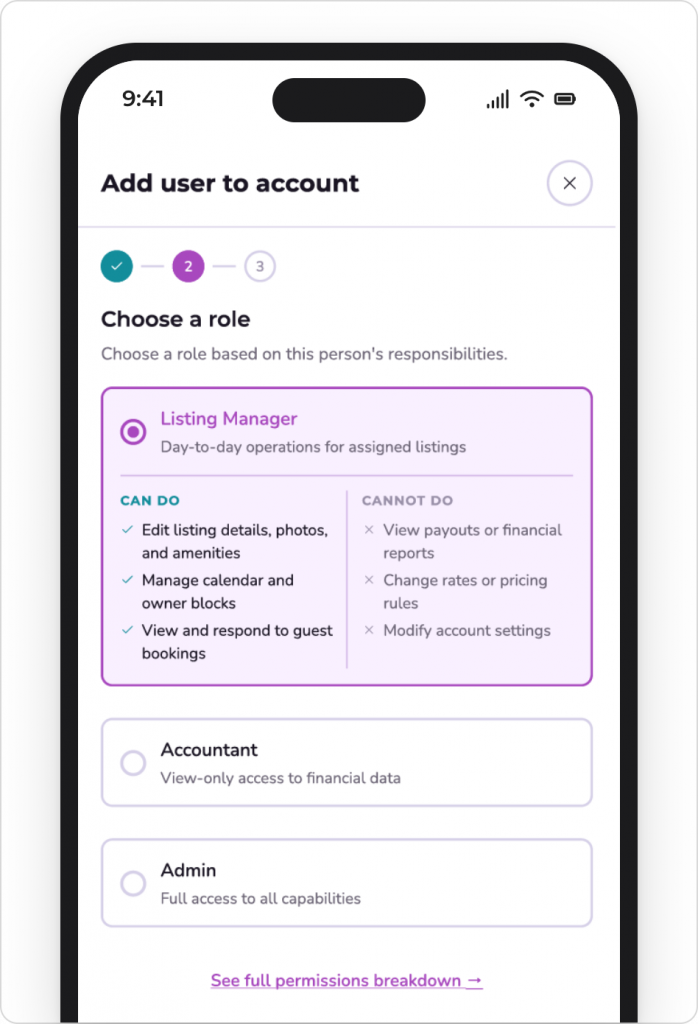
Pro management plan: Assigning unique access by property is just one of the ways Pro is built for owners and operators running more than one property. Pro has every Plus benefit (including a Dedicated Performance Advisor), plus tools built specifically for multi-property operations, like a Dedicated Booking Website, Linked Listings for co-located units, and management fees tailored to your portfolio.

Why it matters:
Some owners are ready to go all-in on longer stays, and want their property marketed accordingly rather than treated as a standard short-term listing.
What’s new:
The new Mid-Term Rental Add-On is built for owners with minimum stays of 28 nights or more. In addition to the booking sites your property is already listed on, it will also be marketed where extended-stay guests go first: Furnished Finder, Zillow, Apartments.com, and Blueground. Plus, revenue management built specifically for monthly-stay pricing.

All of this came from conversations with owners like you — a support call, a survey response, a feature request. That feedback shapes what we build next, and we’re committed to helping owners perform at their best, keeping the experience simple, and giving greater peace of mind along the way.
If you haven’t watched the full update yet, check it out here. To all Evolve owners, thank you for your partnership. We’re excited to keep building with you.
Whether you’re a first-timer just getting started or a seasoned owner looking to expand your portfolio, our team is here to help make vacation rental easy. Fill out the form below to see if you qualify for our services.
How to furnish a vacation rental for guests isn’t the same as furnishing your own home. Every piece needs to survive dozens of strangers a year, photograph well enough to earn a booking, and feel comfortable enough to earn a five-star review.
Guests notice more than owners often expect — a comfortable bed shows up frequently in five-star reviews, while a couch that looks worn in photos can cost you a booking before a guest ever walks in.
Here’s your essential guide to vacation rental furnishing without over- or under-spending.
In This Article:
Set a Budget Before You Set Foot in a Store
Room-by-Room Essentials
Focus on Function
Durability Matters
Make the Home Easy to Clean
Don’t Skip the Unglamorous Stuff
Balance Neutrality and Personality
Know Where to Splurge and Where to Save
Remove Any Personal Clutter
Furnishing costs vary widely depending on how much of the work you take on yourself. Owners who thrift and DIY can furnish a one- or two-bedroom rental for a few thousand dollars. Owners who hire a professional furnishing service to handle sourcing and setup should expect a much higher number, often into the five figures for a full home.
Set your budget first, and split it by room before you start buying. Living rooms and bedrooms usually need the largest share of investment, since that’s where guests spend the most time. Kitchens and bathrooms can be furnished well without spending as much, as long as everything is functional and clean.
A clear budget keeps a single “must-have” item from swallowing the money you needed for six other rooms.
When you work with Evolve, we can connect you with a design and furnishing partner who saves you time setting up your rental and helps you earn more on average from every stay. Our Plus and Pro owners also get access to premium furnishings and supplies at exclusive discounts in the Evolve Marketplace.
Every room has a short list of items that guests expect and notice when missing.
Skipping any of these tends to show up in guest messages before it shows up in reviews — which is your cue to fix it fast.
Download our inventory checklist for a complete room-by-room guide to rental furnishing. It includes every essential you need for success, space to note quantities and conditions, plus extra pages to add your own touches to the shopping list.
While shopping for your must-have furniture, consider how each piece fits functionally into your rental. To help, think about how you make use of your own living spaces at home. Seating orientation in your living room should make it easy for everyone to gather around the TV, for instance, and there could always be a surface within arms reach to put down a refreshment. It’s these thoughtful elements of convenient, functional design that allow your guests to truly relax.
Rental furniture takes more wear in a year than most residential furniture takes in a decade. Skip faux wood and particleboard pieces — they rarely survive a single busy season. Look instead for solid construction and performance fabric on sofas and armchairs, which resists stains far better than standard upholstery.
Assembly matters too. Flat-pack furniture can take three to four hours to put together correctly, and a wobbly bed frame or loose dresser drawer becomes a maintenance call — or a bad review — within the first few bookings. If you’re furnishing several rooms at once, it’s often worth paying for professional assembly rather than losing a weekend to an Allen wrench.
Durable and well-built furniture costs more upfront — but far less over time.
Every furnishing choice is also a housekeeping choice. Area rugs over hard flooring clean faster than wall-to-wall carpet. Machine-washable throw pillows and comforters save a cleaner real time on every single turnover. High-pile rugs and delicate upholstery might look nice in photos, but they slow down turnovers and shorten the life of the piece.
Furnishing with your cleaning team and turnover checklist in mind pays off with every booking.
The items that never make it into a listing photo or description are often the ones guests remember most.
Extra pillows and blankets, a complete first-aid kit, working smoke and carbon monoxide detectors, and a welcome book with clear instructions for the thermostat, appliances, and entertainment systems all shape whether a stay feels effortless or frustrating.
None of this is necessarily exciting to shop for or document, and that’s exactly why it gets skipped. But they’re all key elements of how to furnish a vacation rental for guests. Build a checklist with these items before rental setup begins, so none are an afterthought you have to squeeze in. (Our inventory checklist does this for you.)
Maximizing your booking potential means making sure your property appeals to as many guests as possible. To do this, you’ll want to balance simplicity and style in your vacation rental interior design.
For larger-scale furnishings like sofas and bedspreads, shop for neutral tones. Creams or grays create a sleek and modern base, while earthy browns create a warm, rustic feel. Whatever palette you choose, starting with a neutral foundation helps more people envision themselves in your space.
From there, you can layer on unique accents that set your home apart from competitors. Incorporate pops of color with throw blankets, decorative pillows, and area rugs. To make even more of a statement, consider adding wallpaper to amp up a space — or playing into a theme.
When adding personality in these ways, it can be helpful to lean into your property’s location. If you’re in a beachy area, for instance, consider nautical accents like anchor hooks for jackets or seashell art. If you have a cabin in a mountain community, explore reclaimed materials like wood, stone, and leather for a nature-focused feel.
Not every type of decor deserves the same budget. The mattress and sofa are worth spending on, since guests use them the most and notice quality immediately. If you’re marketing a chef’s kitchen, quality cookware is a good investment, too. Decor, art, and small accents, however, can come from lower-cost sources without hurting the guest experience at all.
Be clear about where you draw those lines and establish a furnishing standard. It makes it easier to decide what’s worth the price and what isn’t when you’re in the thick of shopping.
It also helps streamline operations when you’re managing multiple properties (or looking to grow). Setting one furnishing standard and applying it everywhere is more efficient than re-negotiating these trade-offs room by room, home by home.
When you know how to furnish a vacation rental for guests, every space feels homey and personal — but it shouldn’t look like someone else lives there. Even though you’re likely using your vacation rental from time to time, make sure family photos, articles of clothing, toiletries, or other personal items are out of sight for your guests.
That’s not to say you can’t share tidbits about your family or the history of your home in a place like your welcome book. But when it comes to what’s on the shelves and in closets, your vacation rental should have no trace of other people — so guests can truly make it their own.
Consider locking off the basement, attic, or a particular closet for owner use only. Your personal belongings will be safe and secured while guests are on property without impacting their experience — but still easy to grab when you pop in for a stay.
How to furnish a vacation rental for guests comes down to functional, durable choices that appeal to a variety of travelers. A well-furnished home makes its cost back through better photos, stronger reviews, and fewer maintenance calls.
If you’d rather have professional support getting your home set up and strategically managed, see if you qualify for a free consultation with our team.
Managing more than one rental property increases your earning potential as an owner or operator. But it can also push logistics to the limit: you have more guest messages to handle, more cleaning schedules to coordinate, more pricing strategies to monitor, and multiple calendars that need to stay in sync across every channel you list on.
Most advice on managing multiple properties is written for long-term landlords juggling leases and tenants. Short-term or mid-term rentals run on a different clock — including routine cleaning turnovers, dynamic pricing updates, and guests who need a same-day response when trouble with the door code comes up.
Here are five key tips for managing multiple properties — from must-have property management tools to best practices for streamlining operations.
Cut to the chase and consider our Pro management plan — designed specifically for multi-property owners and operators to maximize the success of your portfolio.
In This Article:
Build One System, Not Five
Standardize Turnovers
Pick Software That Grows With You
Track the Numbers That Tell You It’s Working
Know When to Hand Off the Work
The owners who scale smoothly usually have one thing in common: they stop running each property as its own project. Instead of a separate spreadsheet, calendar, and inbox per home, they use a single system that covers every property the same way — one calendar view, centralized reporting, synced channel marketing, and a single inbox for guest messages.
That consistency prevents duplicate work and minimizes the risk of important to-dos falling through the cracks — issues that eat up valuable time and impact your guest experiences.
Evolve owners on our Pro plan get multi-channel distribution, a dedicated booking website, and the ability to manage every property from a single app. So operational consolidation happens automatically rather than something you have to engineer yourself.
Turnovers are where multi-property management usually breaks first. One property might take a two-hour clean; two properties on the same check-out day means your cleaning crew now has a route to run, not just a job to do.
Build standard turnover checklists — what gets cleaned, what gets restocked — so every property is inspected the same way regardless of which service providers are on-site.
And build an easy-to-follow schedule with your crew (or crews) that you can scale with your portfolio. Everyone should have quick access to the week’s upcoming check-ins and check-outs across properties, plus clear directives on how to communicate that each job is done.
That structure keeps small maintenance items from turning into five-star review problems.
A single rental can get away with manual management and a bit of strategic trial and error. A portfolio can’t. Once you’re juggling more than one home, the tools that matter most are a channel manager that keeps every listing in sync across booking platforms and dynamic pricing that adjusts nightly rates without you staring at demand trends per property every morning.
This is where we do a lot of the heavy lifting for our owners. Each property is distributed across all the top booking sites — and our SmartRates algorithm adjusts prices automatically across every property in the portfolio at once.
And it’s worth noting: these strategic benefits are in place no matter how many properties you have — so the value scales with you.
Once you’re managing multiple properties, tracking every last metric can become a real strain. Prioritize a handful of numbers that give you the best outlook on performance and where your strategic gaps lie:
Reviewing these weekly, across the whole portfolio, is what catches a slow-performing listing before it drags down your earnings. Conduct research to identify benchmarks for each property’s market to measure their performance against. (If you work with a company like Evolve, our revenue managers have their fingers on the pulse and look at these numbers daily.)
There’s a point where doing it all yourself stops being efficient and starts being a bottleneck. For many owners, professional management is the right choice for maximizing the success of a single property. For others, a growing portfolio is what signals it’s time to look for help.
Property management for multiple properties gives owners who’ve built a robust rental business the tools to support that scale — and the ability to reinvest time elsewhere. Handing off operations doesn’t mean losing control or visibility. It actually means getting it back.
Managing one vacation rental well is a skill. Managing several well is a system. The owners who scale successfully build that system early — one set of tools, one turnover standard, one place to see how every property is performing — instead of running five versions of the same business at once.
If you’re weighing whether to keep building that system yourself or hand the operations to a team that already runs it at scale, see if you qualify for a free consultation with one of our Vacation Rental Advisors.